Papergate

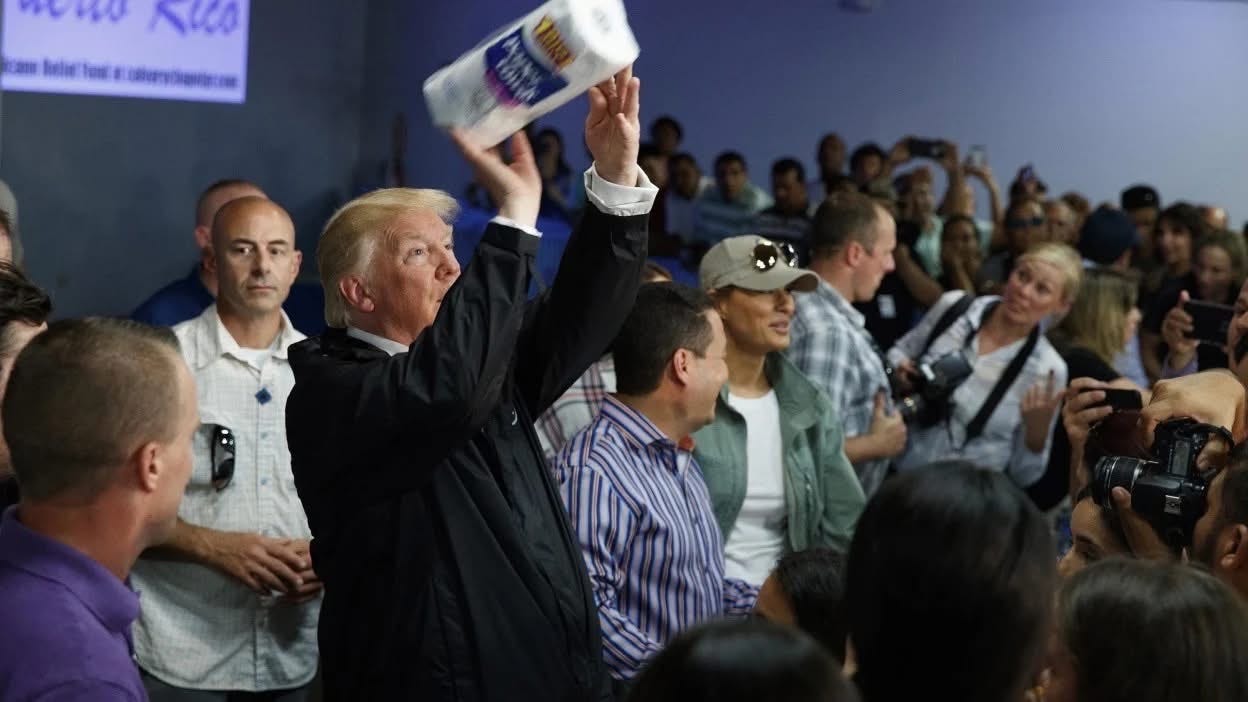
I remember the footage like it was yesterday, Donald Trump standing in Puerto Rico in 2017 after Hurricane Maria ripped the island apart, lobbing paper towels into a crowd like he was working a halftime tee-shirt cannon. Ninety percent of the island without power. Families without water. Hospitals running on fumes. And the President of the United States joking about how expensive it all was for “us.” Visiting Guaynabo, the polished corner, while the rest of the island sat in darkness. Later he’d redraw a hurricane map with a Sharpie to squeeze Alabama into its path, downplay COVID with miracle talk and quack cures, toss water bottles and MAGA hats to East Palestine residents like branding was relief. A caring and loving leader, we were told. It would be funny if it weren’t so grotesque. That paper-towel moment wasn’t a gaffe. It was a tell, a flash of how he sees people in crisis: props in his performance, recipients of his magnanimity, grateful extras in the theater of Trump.
And then fast-forward to this year. Bad Bunny steps onto the Super Bowl stage, not as a victim, not as a punchline, not as a backdrop for someone else’s ego, but as a global artist from Puerto Rico commanding the world’s attention on his own terms. The crowd hungry for rhythm, for diversity, for something that feels like the future instead of the past. That’s the arc that matters. The island once mocked and minimized now exporting culture, pride, language, and love to billions. You can’t dismiss what happened in 2017. You shouldn’t. The image of those paper towels will live in the archive of American shame. But what happened on that halftime stage feels like an answer, not revenge, not bitterness, but radiance. Puerto Rico didn’t get even. It got louder. It got prouder. It showed that dignity survives disaster, that culture outlasts cruelty, and that love, stubborn, rhythmic, unapologetic love, still conquers hate.
— Michael Jochum, Not Just a Drummer: Reflections on Art, Politics, Dogs, and the Human Condition.